

From Chaos to Structure
Why Object-Oriented Programming Still Works
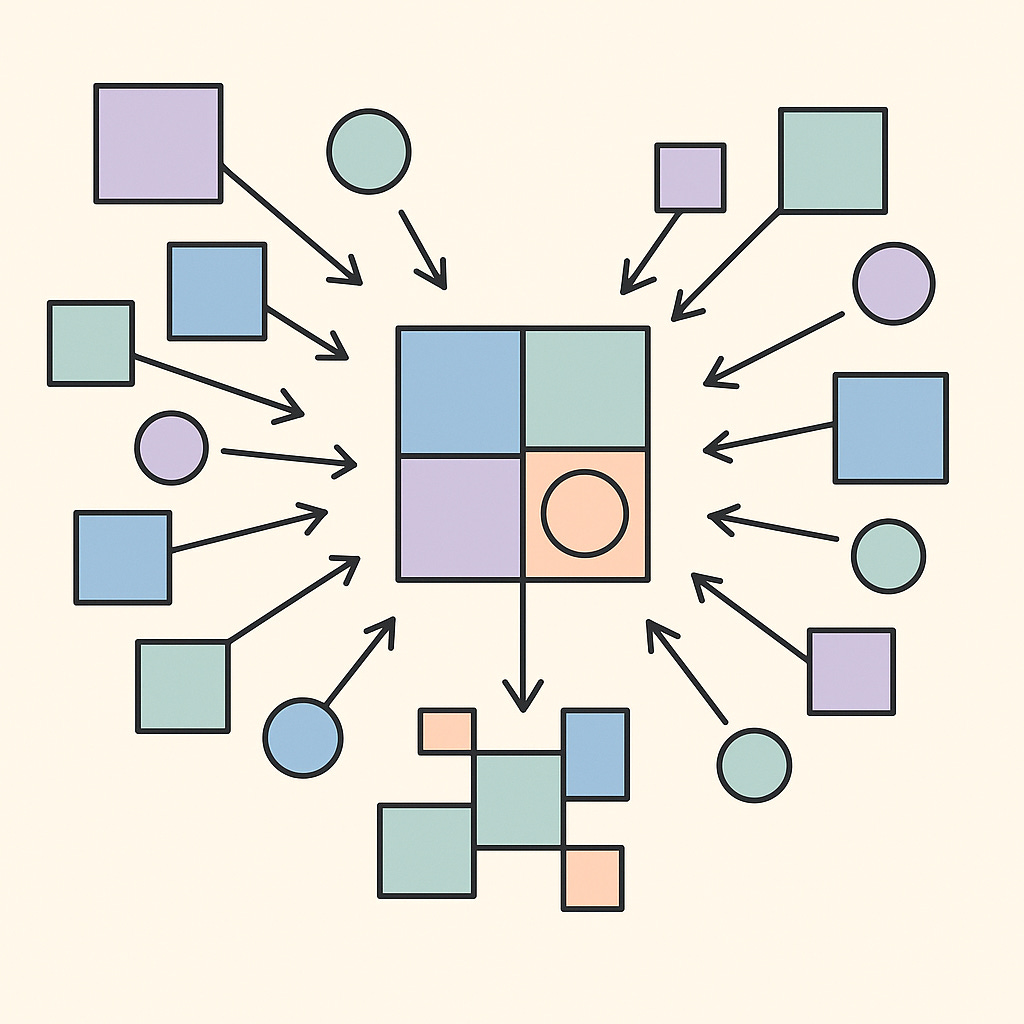
Software can be written in many ways. Some developers think in steps, others in data, and others in relationships. Each style has its strengths, but each also creates its own kind of mess if pushed too far. Understanding those tradeoffs helps explain why object-oriented programming (OOP) became the foundation for most modern software.
Different Ways to Think About Code
Before OOP, there were a few dominant styles of programming. They each shaped how people thought about software and what kinds of problems it could handle.
Procedural Programming
Procedural programming thinks in steps. You write a sequence of instructions that the computer follows from start to finish. It is direct, predictable, and easy to reason about for small tasks.
You can see it in early languages like C or BASIC:
Load the data.
Process it.
Print the result.
It is great for small utilities, data scripts, and system tools. But as software grew, these long chains of steps started to tangle. When everything knows about everything else, changing one line can break ten others. It works beautifully for one person, one file, one problem but it falls apart when a system grows beyond that.
Functional Programming
Functional programming looks at the same problem from a different angle. Instead of steps, it focuses on transformations. You pass data into a function, and it returns a result. That function does not change anything outside itself.
This makes functional code very predictable and easy to test. It is powerful for data analysis, parallel computing, and situations where you want to guarantee the same output for the same input.
The downside is that functional programming can feel abstract. Real-world systems often depend on changing states, updating an order, tracking an account, sending an email and those side effects must live somewhere. Managing that balance takes discipline, and it is not always intuitive for teams or for business problems that live in motion.
Data-Oriented and Event-Driven Approaches
Some systems care more about how data is laid out or what events happen than about the code itself.
A data-oriented approach focuses on performance. You design data structures so the computer can move through memory efficiently. It is common in game engines and simulations, but less useful for business applications.
An event-driven system is all about reacting to things that happen like a message arriving, a payment posting, or a sensor firing. It is excellent for scalability and flexibility, but over time, the web of events can become hard to trace and debug.
Each of these styles solves part of the problem, but not the whole.
The Problem: Everyone Speaks a Different Language
As systems grew larger and more complex, one problem became clear: developers, designers, and business stakeholders were not speaking the same language.
Code was filled with technical terms that did not match what the business meant. A function might be called ProcessInvoice, but what it actually did could differ from how the finance team defined “processing.” Different teams used different words for the same idea, and software quickly became a maze of mismatched assumptions.
That gap between people and code was costing time, money, and clarity.
Domain-Driven Design
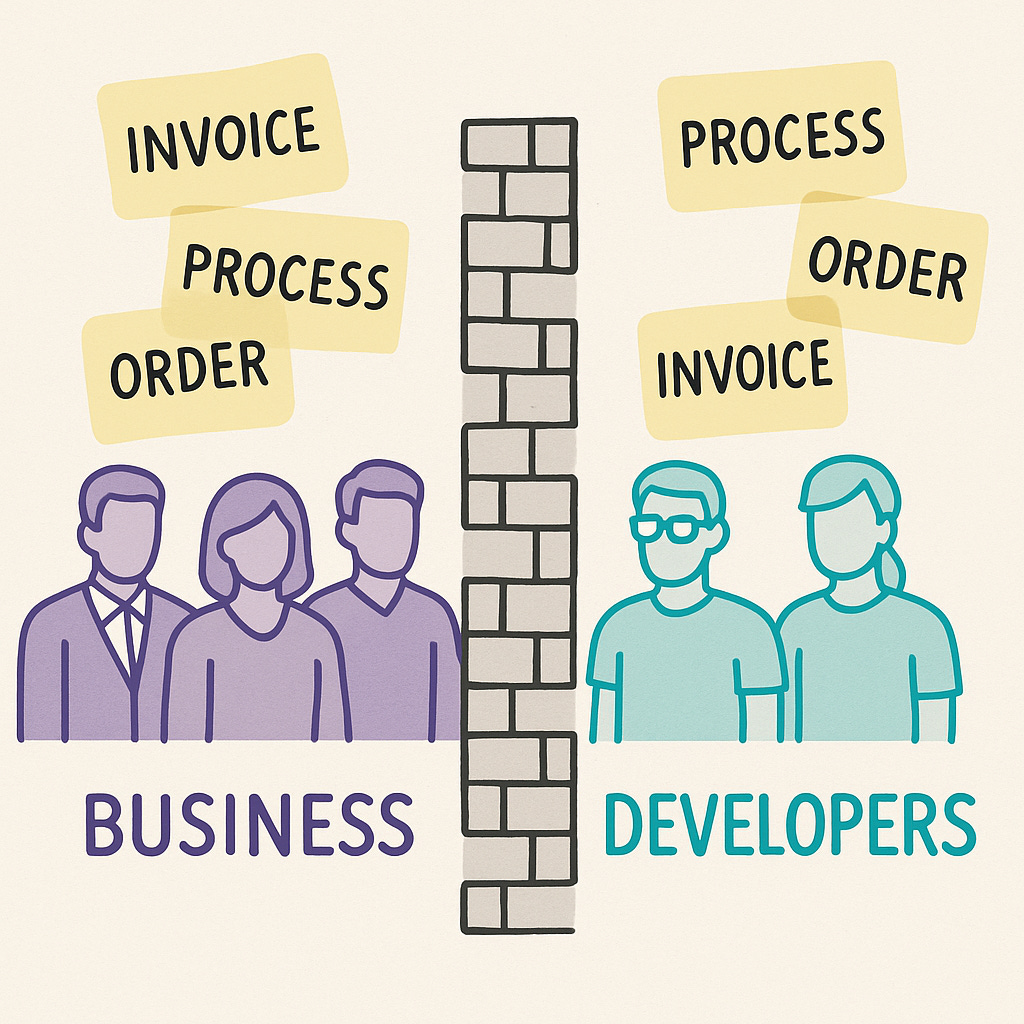
In the early 2000s, software architect Eric Evans introduced Domain-Driven Design (DDD) a way to close the gap between code and conversation.
The idea was simple but powerful: the software’s structure should reflect the way the business thinks.
DDD encouraged teams to create a ubiquitous language, that is shared terms that everyone used, from developers to executives. That meant when someone said order, invoice, or shipment, it meant the same thing in a meeting and in the code.
To make that work, DDD introduced a few key ideas:
Entities represent real-world things with an identity, like a customer or a payment.
Value Objects hold meaning but no identity, like a date range or an amount of money.
Aggregates group related entities and control how they change together.
Bounded Contexts divide large systems into smaller, self-contained areas where the language stays consistent.
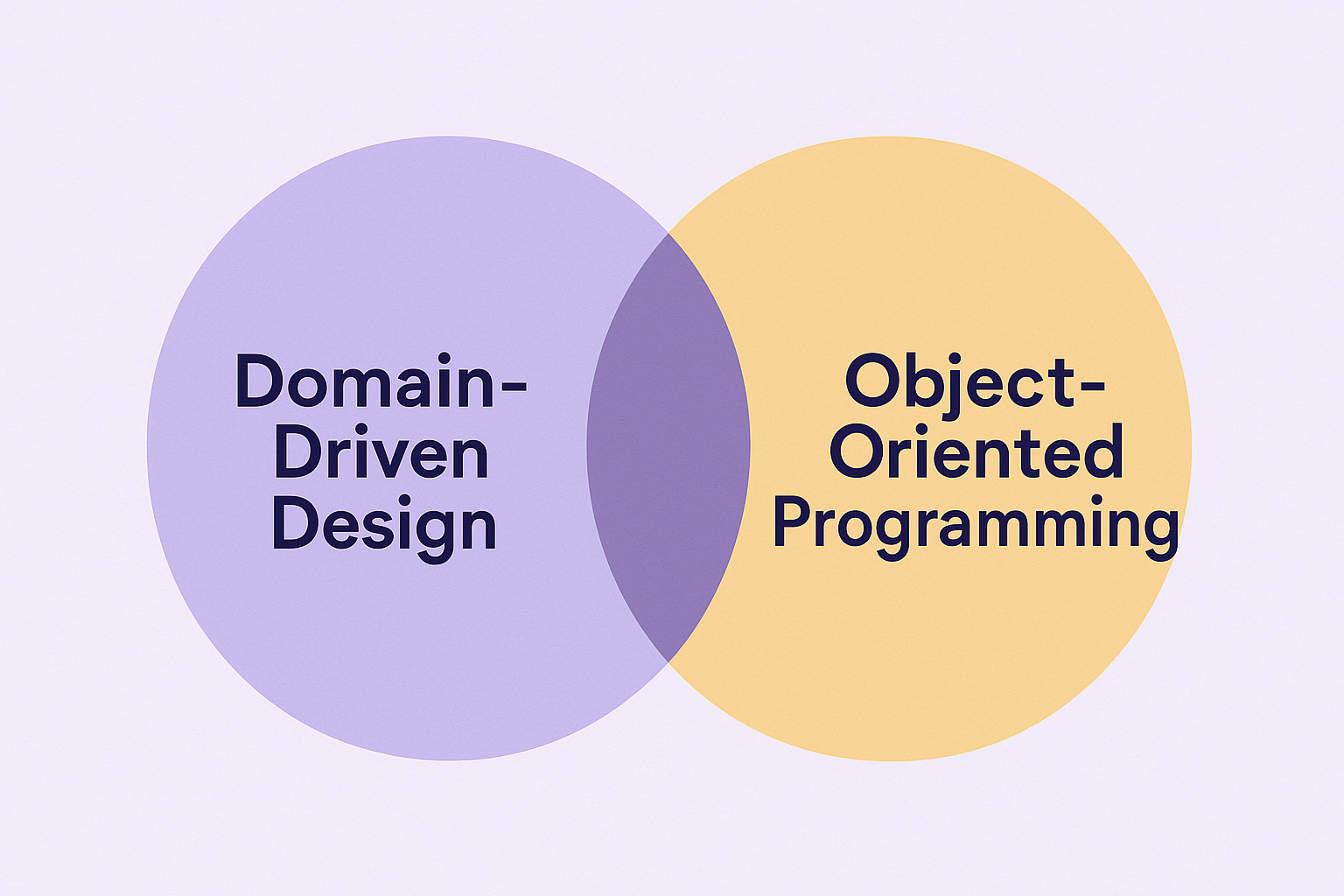
DDD made it easier to model real problems, but it needed a programming style that could express those models cleanly. That is where Object-Oriented Programming helped out.
Object-Oriented Programming
OOP organizes code around objects, things that combine both data and behavior.
An object might represent an order. It knows its own data (the order items, totals, and status) and how to act on that data (apply a discount, mark as shipped, or cancel). You do not need to know how it does those things only that it can.
This idea of encapsulation, keeping data and the rules for that data in one place, matched perfectly with Domain-Driven Design. It allowed software to mirror real concepts in the business world.
Instead of endless procedures or disconnected functions, OOP brought structure and boundaries. Each object could represent a small piece of the domain, and together they formed a clear, maintainable system.
Why OOP Works So Well with Domain-Driven Design
Shared language: Classes, entities, and aggregates map directly to the business concepts from DDD.
Natural boundaries: Objects can enforce rules within themselves, so each part of the system owns its behavior.
Evolution over time: As the business changes, you can extend or replace objects without breaking the rest of the system.
Team alignment: Developers and non-developers can discuss the same ideas using the same language and less gets lost in translation.
DDD gave teams a framework for clarity. OOP gave them the tools to build it.
Pros and Cons of OOP
Pros
Models real-world concepts in a way people understand
Encourages encapsulation and clear interfaces
Works well for large systems with complex rules
Supported by nearly every major programming language and toolset
Cons
Can lead to deep inheritance chains that are hard to untangle
Overuse of abstraction can make code more complicated than necessary
Boundaries can blur if naming and modeling are unclear
Sometimes slower than functional or data-driven approaches for heavy computation
The Bottom Line
OOP is not perfect, but it remains the most practical way we have to turn human understanding into working code.
It lets teams think and talk about software in the same terms they use to describe the real world. Combined with Domain-Driven Design, it gives structure to complexity and clarity to communication a bridge between how people see a problem and how computers solve it.
⚙️ You’ve already built something smart now let’s make it shine.
Building something with no-code or AI tools and got stuck? We help you troubleshoot, refine, and connect what you’ve started — clean, simple, and reliable.
👉 Learn more at Lucenra Solutions