

What is a Cloud.
The Cloud UnClouded
When people talk about “the cloud,” it sounds like magic a soft, invisible space where your data and apps just… exist.
But the truth is far less mystical: The cloud is just someone else’s computer.
Well, sort of. It’s actually thousands of other people’s computers, packed into enormous data centers, networked together, and running software that makes them feel like one infinite machine.
The cloud’s big trick isn’t that it’s floating in the sky it’s that it makes real, physical hardware disappear behind layers of convenience, automation, and scale.
From Physical Servers to Virtual Infrastructure
Before the cloud, every company that needed to run software had to buy and maintain its own servers. They sat in back rooms or data centers, humming away, requiring power, cooling, and regular maintenance. Scaling up meant ordering new hardware and waiting weeks for it to arrive.
Then came virtualization the breakthrough that made the cloud possible.
Instead of dedicating a whole computer to one application, virtualization let you slice up a single physical server into many virtual ones. Each acted like its own machine, but all shared the same hardware.
That idea hardware that behaves like software changed everything.
Now you could rent computing power by the hour, spin up servers instantly, and scale up or down based on demand. That was the birth of Infrastructure as a Service (IaaS) the foundation of modern cloud computing.
What’s Actually in the Cloud
If you could walk inside “the cloud,” you wouldn’t see anything fluffy or abstract. You’d see rows upon rows of machines servers, switches, routers, and cooling systems all buzzing quietly in vast warehouses. Each of these facilities is a data center, and together they form the physical backbone of the cloud.
The magic happens in how they’re organized:
Regions are geographic clusters of data centers (for example, “us-east-1” in Virginia).
Availability Zones (AZs) are individual facilities within those regions, built to be independent of one another. If one goes down, the others keep running.
Edge locations are smaller, local points that bring content closer to users so a video loads faster in London or São Paulo.
It’s a global network built for redundancy, reliability, and speed. If one server fails, another steps in before you even notice. It takes something more catastrophic for us to notice like a DNS change that causes the internet to not be able to find these redundant servers.
Why AWS, Azure, and Google Cloud Are the Big Players
Today, three companies dominate the cloud landscape:
Amazon Web Services (AWS) the pioneer and largest provider, offering everything from virtual machines to AI tools.
Microsoft Azure popular with enterprises, great for hybrid setups that mix cloud and on-premise systems.
Google Cloud Platform (GCP) known for analytics, machine learning, and clean developer tools.
There are others like DigitalOcean, Linode, and Oracle Cloud but the big three run the majority of cloud workloads globally.
Each offers the same basic idea: rent computing power, storage, and networking on demand. The differences are in pricing, ecosystem, and extras like automation tools, security frameworks, or AI integrations.
The Layers of the Cloud
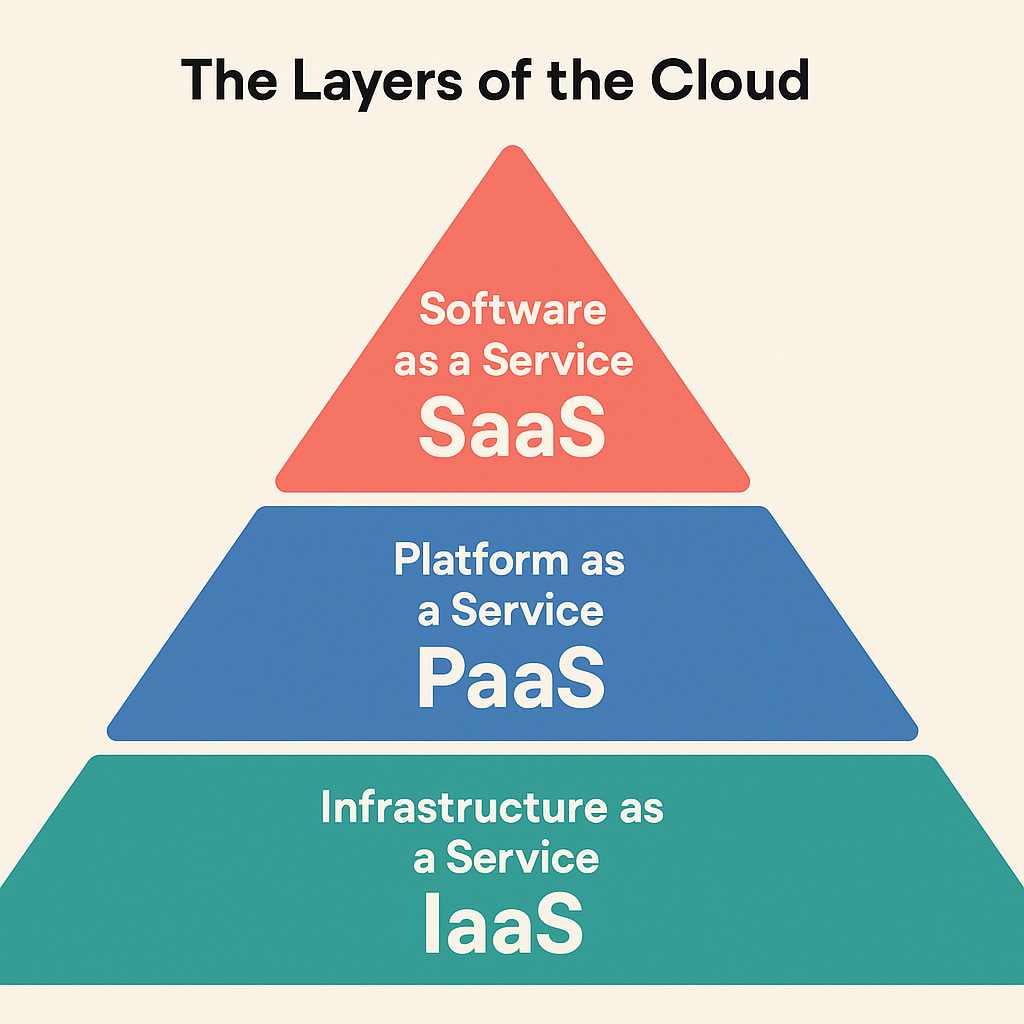
The “cloud” isn’t one thing it’s a stack of services that trade control for convenience:
Infrastructure as a Service (IaaS):
You manage servers, networking, and operating systems. The provider handles the physical hardware. Example: AWS EC2, Google Compute Engine.
Platform as a Service (PaaS):
You focus on your app the provider manages the infrastructure and runtime environment. Example: Heroku, Azure App Service.
Software as a Service (SaaS):
You just use the software through your browser. Everything else is handled for you. Example: Gmail, Slack, Salesforce.
Each layer builds on the one below it giving developers, startups, and enterprises more freedom to focus on what matters: building.
How the Cloud Changed Development
The cloud didn’t just change where software runs it changed how software is built. Before, setting up a new environment could take weeks. Now, developers can spin up a full-stack system in minutes. Cloud infrastructure ties directly into CI/CD pipelines, allowing teams to push changes, test automatically, and deploy instantly. It’s what turned long release cycles into daily updates and made the idea of “software as a living service” possible.
Startups can launch globally without owning a single server. Enterprises can modernize without replacing decades of hardware.
Cloud Costs, Security, and Shared Responsibility
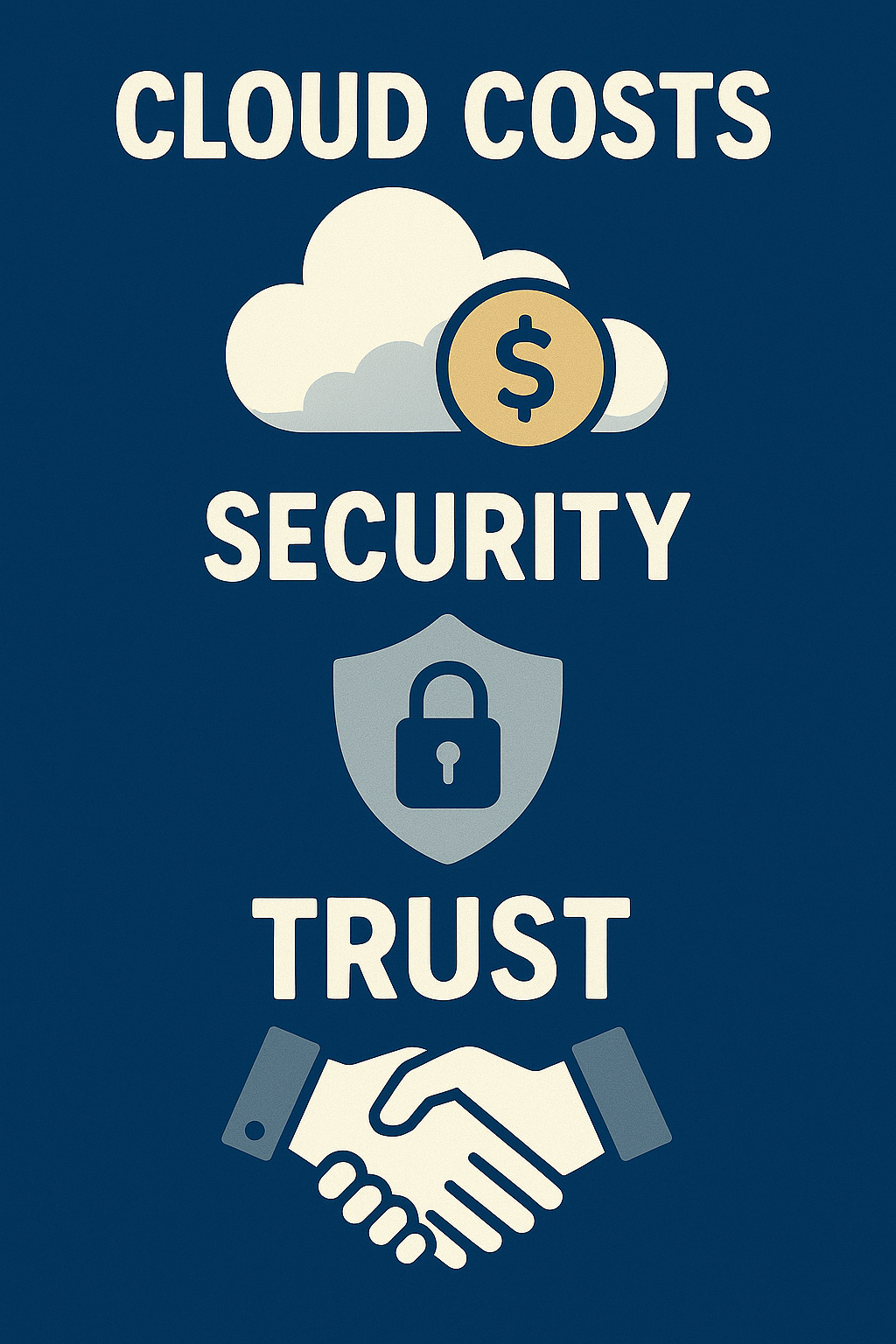
Here’s what the cloud doesn’t mean: “no worries.”
Your provider manages the physical security, power, and uptime but you still manage your own data, users, and configurations.
That’s called the shared responsibility model:
The provider keeps the infrastructure safe.
You keep what’s on it safe.
Misconfigured storage buckets, exposed API keys, and weak credentials still cause the majority of cloud breaches.
And costs can spiral fast pay-as-you-go is powerful, but forget to turn something off and you’ll meet the cloud’s dark side: the surprise bill.
Trusting the Cloud
Using the cloud is ultimately about trust, trust in automation, encryption, and infrastructure built by others to keep systems running reliably.
That approach has proven effective. Today, the cloud underpins nearly everything: banking systems, video streaming, enterprise platforms, and small business tools alike.
Many organizations still use a hybrid model, keeping certain data on-premise while running other workloads in the cloud. The goal isn’t to move everything it’s to choose the right mix for performance, security, and cost.
The cloud represents the next stage of computing: a shift from owning hardware to consuming it as a service. It isn’t abstract or distant it’s a global network of connected data centers designed to make technology faster, scalable, and more accessible.
Its value isn’t in where it lives, but in how it enables teams to build, deploy, and innovate more efficiently.